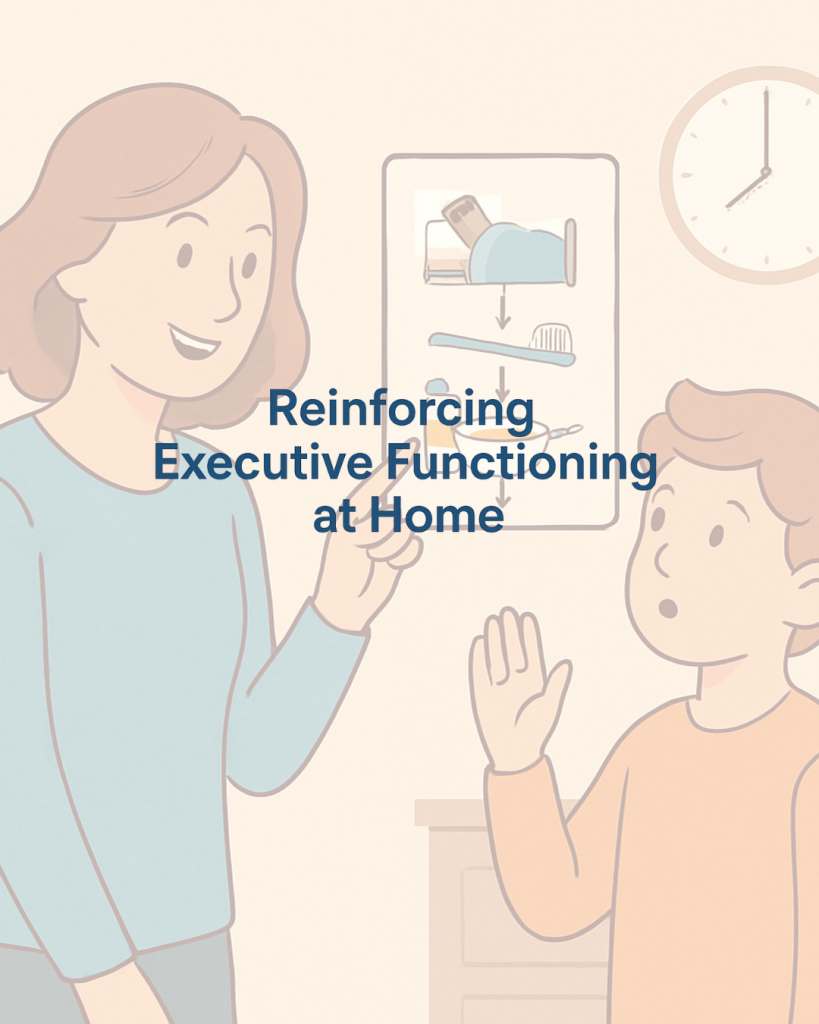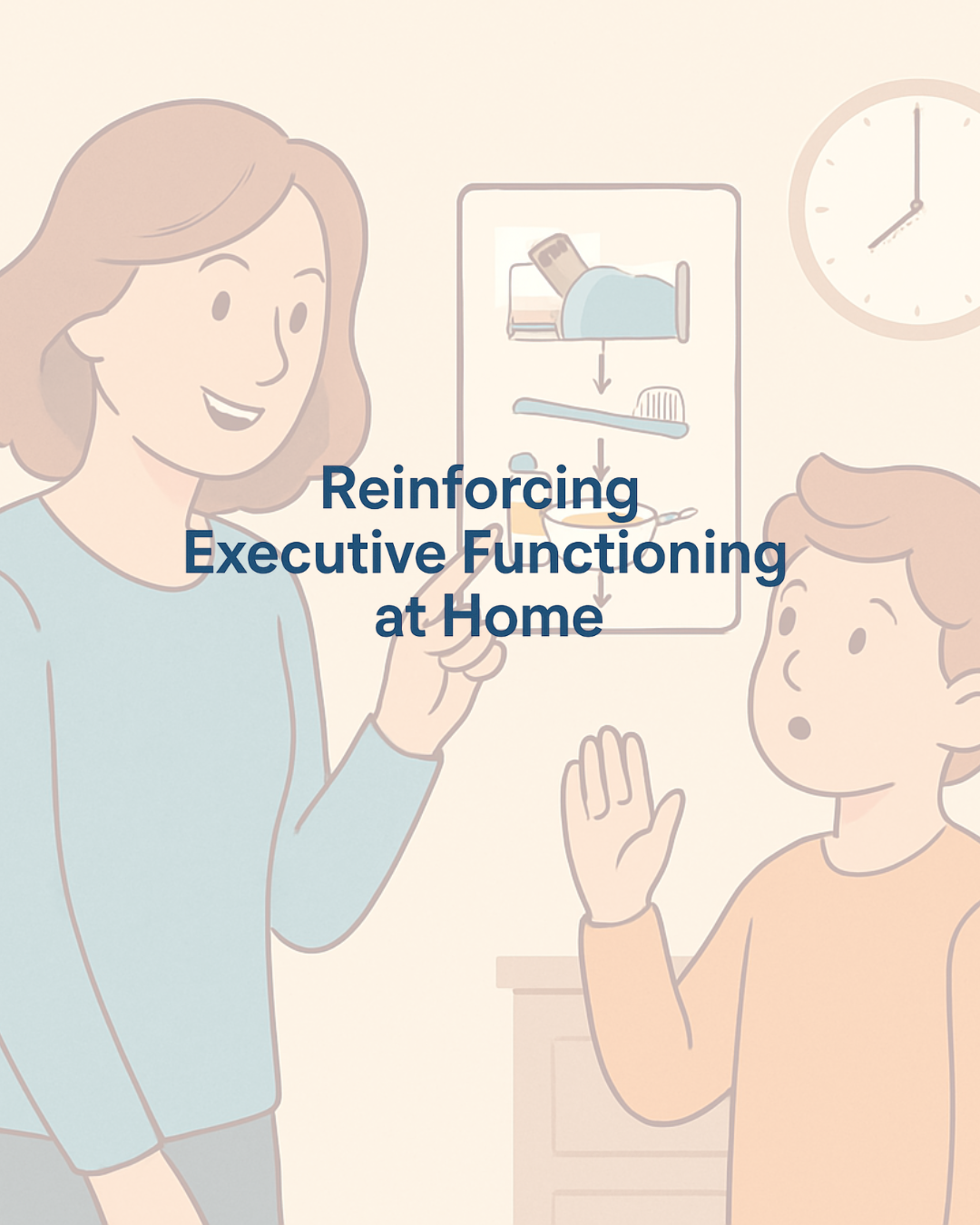
Reinforcing Executive Functioning at Home
Supporting Neurodiverse Learners in Daily Life
Executive functioning skills help children plan, organize, manage emotions, start tasks, and follow through on responsibilities. These skills develop gradually, and for neurodiverse learners, they often require explicit teaching, repetition, and predictable support. Research from developmental psychology, cognitive science, and occupational therapy consistently shows that children build stronger executive functioning skills when their home routines offer structure, visual cues, and opportunities for guided independence.
Below are evidence-based ways families can strengthen these skills at home.
Create Predictable Routines
Studies show that consistent routines reduce cognitive load and help children shift from one activity to the next more successfully. A morning or evening routine becomes a mental map a child can follow, rather than an unpredictable sequence to figure out each day.
What helps:
• Keep the steps simple and in the same order
• Use written or visual schedules children can follow without reminders
• Model transitions with calm, clear language
Use Visual Supports
Visuals remain one of the most effective tools for strengthening planning and organization. Research from the American Academy of Pediatrics and multiple OT frameworks shows that visual cues increase independence and reduce stress during transitions.
Examples:
• Visual checklists for homework, bedtime, or packing a backpack
• Timers to show the beginning and end of a task
• Visual calendars to preview upcoming days or events
Visuals are not crutches. They are external supports that help the brain build internal structure over time.
Break Tasks Into Steps
Children with executive functioning challenges often struggle not with the task itself but with starting it. Breaking a task into smaller steps reduces overwhelm and gives the child concrete action points.
Evidence-based approaches:
• Use “first, then” statements to simplify initiation
• Give one step at a time for new or difficult tasks
• Celebrate completion of each step to reinforce progress
This mirrors the way cognitive behavioral frameworks teach children how to sequence tasks and organize actions in manageable pieces.
Build Emotional Regulation Skills
Executive functioning includes emotional control. Research in child psychology highlights the connection between emotional regulation and successful task completion.
Helpful strategies:
• Label emotions in real time to build awareness
• Model calm strategies like deep breathing or counting
• Offer a quiet space for resetting, not as punishment but as a tool
When children are regulated, planning and organization become far more accessible.
Practice Planning Through Everyday Activities
You do not need workbooks or worksheets to build these skills. Everyday life offers countless opportunities to practice planning, sequencing, and flexible thinking.
Try:
• Cooking together and following a recipe
• Planning a playdate or weekend activity
• Organizing a bedroom or school materials
• Setting goals for the week and reviewing them together
These activities strengthen working memory, impulse control, and sequencing in a natural, meaningful way.
Encourage Independence With Support
The goal is not perfection. The goal is progress. Research consistently shows that “supported independence” creates the strongest gains in executive functioning. This means stepping in only when a child truly needs it, and stepping back when they have the capacity to try on their own.
At home:
• Give choices to promote autonomy
• Offer structured support, then fade it gradually
• Praise the process, not just the result
• Let children experience small, safe mistakes
Children learn to plan and problem-solve when they are trusted to try.
Stay Patient and Consistent
Executive functioning skills take time. They are built through repetition, supported practice, and environments that stay steady even when children feel unsteady. Neurodiverse learners thrive when the adults around them commit to consistency and communicate expectations clearly.
Supporting these skills at home creates a bridge between the classroom and daily life. The more opportunities children have to practice planning, regulating, organizing, and sequencing, the more these skills become part of their internal toolbox.